
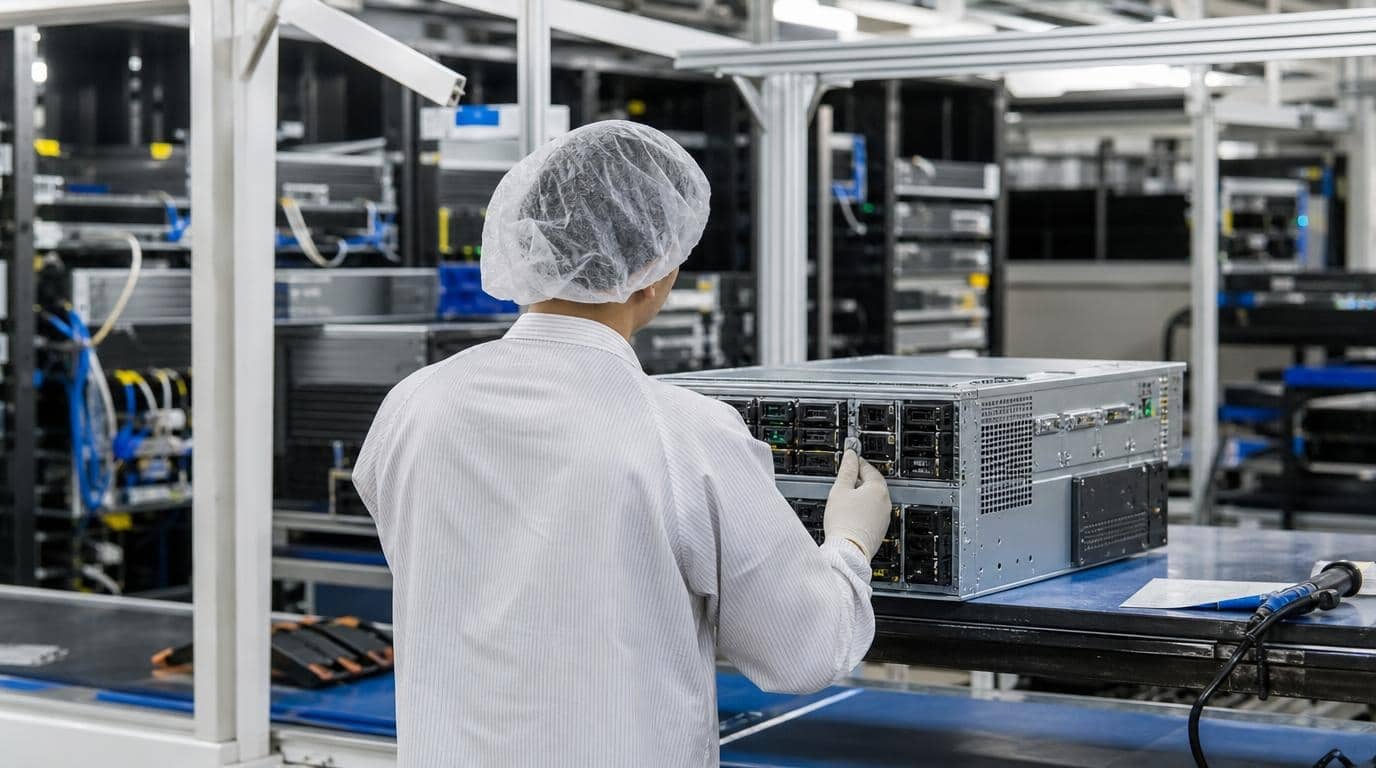
Mexico’s goods exports grew 24.6% in the first half of 2026, driven by US demand for AI equipment
Mexico recorded the strongest goods export growth in Latin America and the Caribbean in the first half of 2026. Shipments rose 24.6% compared with the same period a year earlier, according to the Inter-American Development Bank’s (IDB) Trade and Integration Monitor 2026. The IDB attributed an important part of this expansion to strong demand from the United States for equipment used in artificial intelligence infrastructure. Regional exports grew 19.5% over the same period.
US demand for AI infrastructure equipment supported Mexico’s export gains
The IDB report states that Mexico’s result reflects its growing participation in technology-related supply chains. According to the report, investment in advanced digital technologies is creating new trade opportunities for countries involved in manufacturing and supplying essential equipment. Across the region, the IDB identified growing export volumes as the main driver of trade growth. Rising commodity prices provided additional support to several economies.
Latin America and the Caribbean outpaced global trade growth of 14.5%
The region’s 19.5% export growth in the first half of 2026 exceeded the 14.5% growth recorded in global trade. The IDB reported that Caribbean exports grew 19.1%, with much of the increase concentrated in Guyana and Suriname. South American exports expanded 16.5%, supported by higher prices for mining and energy commodities, particularly oil.
The region reached a record 22.1% share of total US imports
The United States remained the leading destination for the region’s export growth. According to the IDB, Latin America and the Caribbean accounted for a record 22.1% of total US imports during the first half of 2026, even as US purchases from the rest of the world declined. The region’s exporters also regained market share in Europe.
The IDB noted that the region continues to receive more foreign direct investment relative to the size of its economies than any other region. However, inflows during 2023–2025 were 4.5% lower than during 2012–2014. The region’s share of the global foreign direct investment stock declined from 7.1% to 6.0%.
Paolo Giordano, Principal Economist in the IDB’s Productivity, Trade, and Innovation Sector, highlighted the importance of combining international trade and investment commitments with reliable domestic regulations that give investors greater certainty. The report associates double taxation treaties, bilateral investment treaties and trade agreements with investment provisions with a greater likelihood of investment relationships between countries. It also cites demand linked to artificial intelligence and the energy transition as factors that could strengthen the region’s connections with international markets.
