
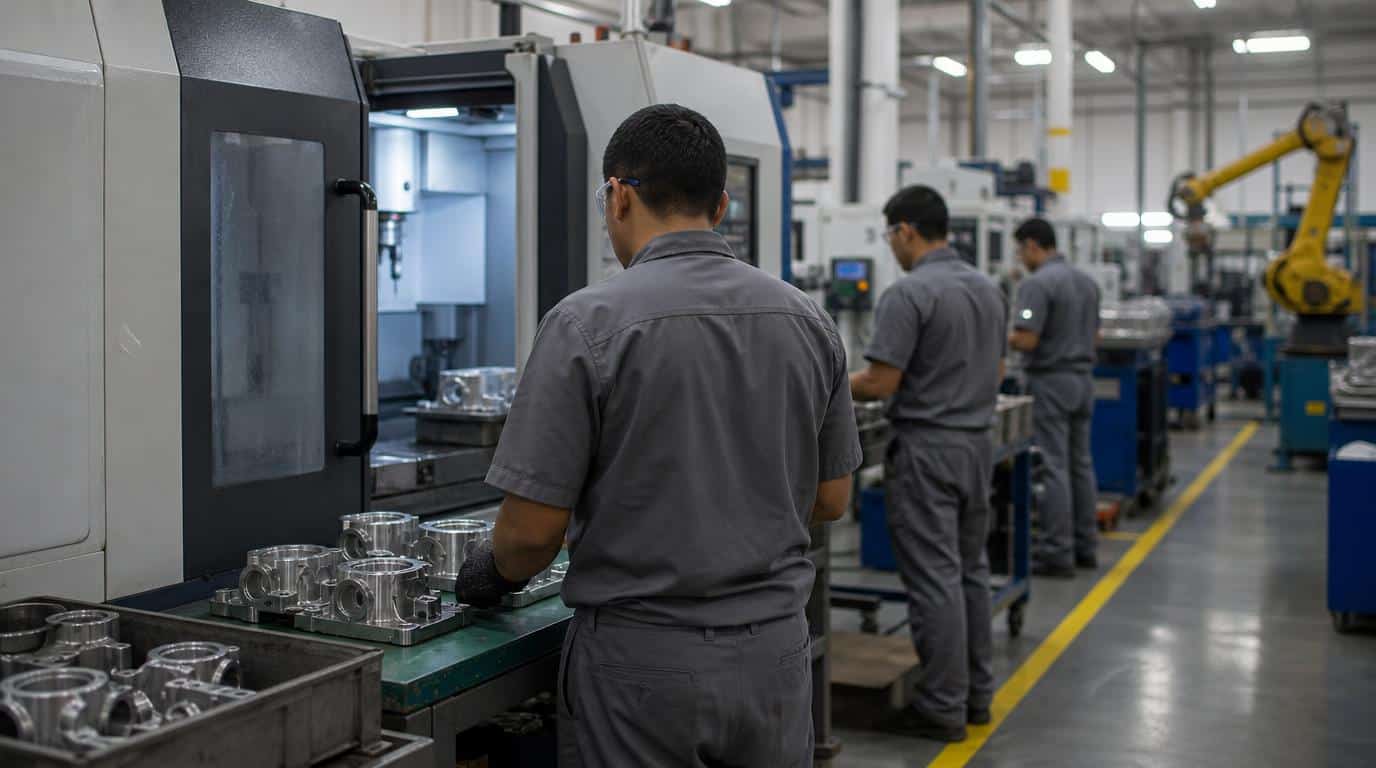
Mexico reaches record US$34,968 million in foreign direct investment, led by manufacturing
Mexico has consolidated its position as a logistics and manufacturing hub, reaching a historic record of US$34,968 million in foreign direct investment (FDI), according to eSemanal. The manufacturing sector drove the result, concentrating close to 39% of the total capital flow. The publication describes industrial relocation as an established constant in the country rather than a future promise. The country also has more than 470 industrial parks.
USMCA rules give most Mexican-made goods tariff-free access to the United States and Canada
Beyond geographic proximity to the North American market, the United States-Mexico-Canada Agreement (USMCA, or T-MEC in Spanish) allows most products manufactured or assembled in Mexico to enter the United States and Canadian markets free of tariffs, which strengthens cost competitiveness compared with other regions of the world.
The agreement also requires a high percentage of components in key sectors, such as automotive, electronics and advanced manufacturing, to originate in North America. As a result, automakers are seeking Mexican suppliers.
Demand for digitalization and automation is growing in the north and the Bajio
Demand for digitalization and automation is increasing in key corridors in the north and the Bajio, in states such as Nuevo Leon, Chihuahua, Coahuila, Baja California, Queretaro, Guanajuato and Jalisco. Global corporations require their entire supplier networks to meet standards for quality, cybersecurity and automation, which makes modernization an essential requirement for small and medium-sized enterprises.
Pool Nolasco, Country Manager for Mexico at Newland AIDC, said that automatic data capture, industrial mobility, RFID technology and reading terminals have become indispensable for optimizing receiving, storage, inventory and traceability. These technologies are integrated with enterprise systems such as ERP, WMS and MES.
Each new plant requires a technology base from its first day of operations
Arturo de la Vega, Director of Digital Transformation at CT Internacional, said that every new plant needs a solid technology base from the first day of operations. He explained that nearshoring activates an ecosystem in which companies require enterprise computing, servers, storage, Wi-Fi networks, cybersecurity, data centers, video surveillance and power backup. Ricardo Castillo, General Director of VICA, described power backup as the vital pulse of operations.
The executives interviewed identified specialized areas of growing demand. These include operational technology (OT) cybersecurity for production floors, PLCs and SCADA systems, as USMCA audits and global automakers require local suppliers to certify their industrial networks. They also include edge computing and decentralized power resilience to keep critical systems, such as AI-based quality control, running through electrical fluctuations, and predictive maintenance using IoT sensors on legacy machinery to support just-in-time requirements.
Technology providers focus on joining projects from the planning stage
The executives agreed that involvement from the planning phase, a thorough understanding of plant operating processes and custom-designed architectures are critical. Zeferino Pérez, Commercial Director at Grupo CVA, said integrators have an opportunity to specialize and address the technology needs of the companies arriving in Mexico and of the suppliers that are part of their production chains. Monserrat Baltazar, Commercial Director at PCH Connect, said her company views relocation not only as an inflow of investment but as a generator of new technology projects.
