
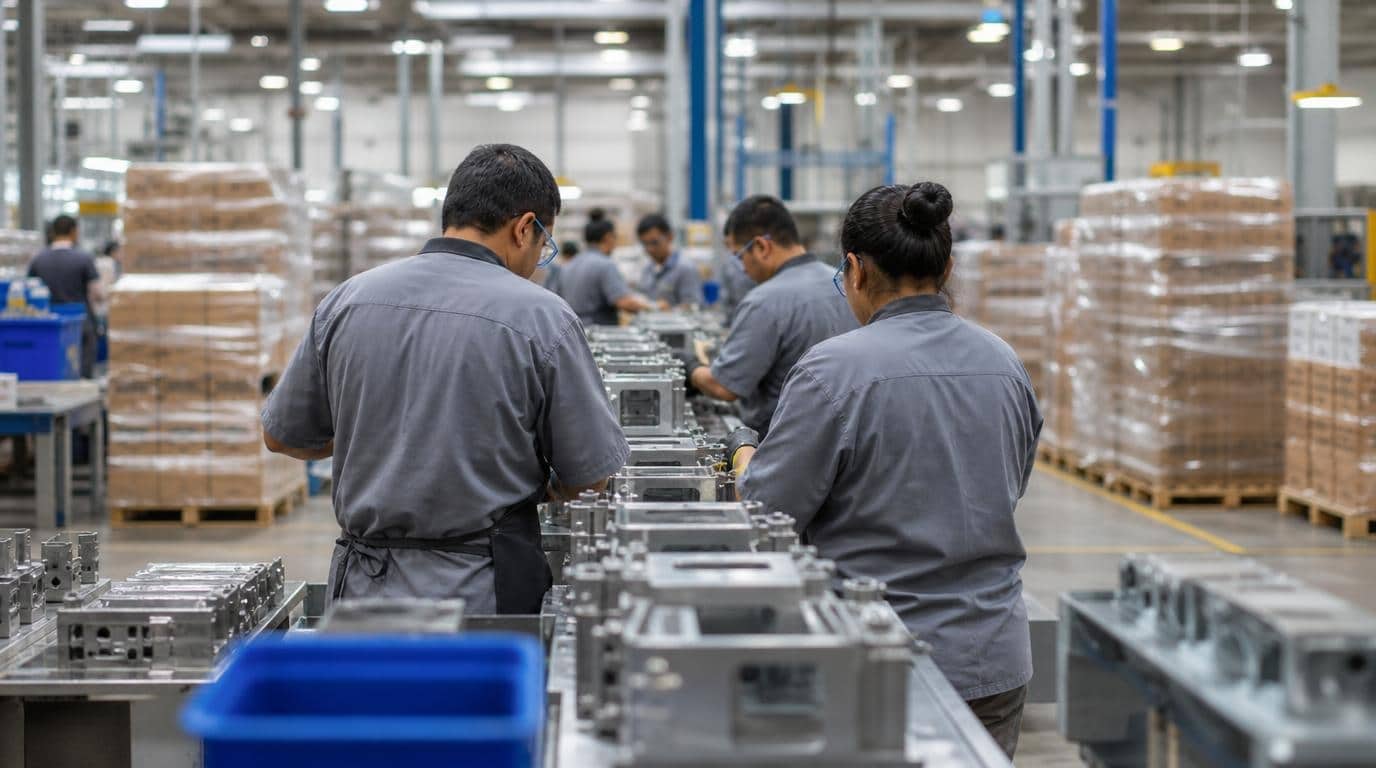
IDB names Mexico top nearshoring winner in Latin America, with up to USD 78,000 million in new exports
The Inter-American Development Bank (Banco Interamericano de Desarrollo, BID) identifies Mexico as the country in Latin America that will gain the most from nearshoring. Its estimate puts the potential at up to USD 35,300 million per year from goods exports. In the short and medium term, the effect could reach up to USD 78,000 million in new exports of goods and services.
The IDB places Mexico first in Latin America for nearshoring gains
The source defines nearshoring as the relocation of a transnational organization’s manufacturing, assembly or supply processes to the country where it sells its products, or to a nation close to that market. Mexico is a major trade partner and the immediate neighbor of the United States. It also serves as a gateway to Central and South America.
The Bank of Mexico reports more foreign companies arriving and 16% of larger firms increasing investment
According to the Bank of Mexico (Banco de México), more foreign companies seeking to benefit from proximity to the United States have arrived in Mexico over a 12-month period. The central bank also found that 16% of companies in the country with more than 100 workers have increased their level of foreign direct investment and demand as a result of nearshoring.
Mail Boxes Etc. points to logistics as central to capturing nearshoring
Mail Boxes Etc. said that logistics solutions are key to benefiting from this shift. Ilan Epelbaum, director general of Mail Boxes Etc in Mexico, said that Mexico’s strategic position and its close relationship with the United States and Canada are advantages that should not be wasted. He noted that exports play a fundamental role in the country’s economy at a time when international transport logistics has been severely affected, and that companies are finding fast solutions in Mexico.
Epelbaum added that the pandemic and recent armed and trade conflicts have pushed companies worldwide to optimize their processes to mitigate financial impacts. He said that although China has historically been an important supplier to the United States, Mexico is positioning itself as an ally. He attributed this to its proximity, secure supply chains within national territory and the strong performance of Mexican industry in sectors such as automotive.
